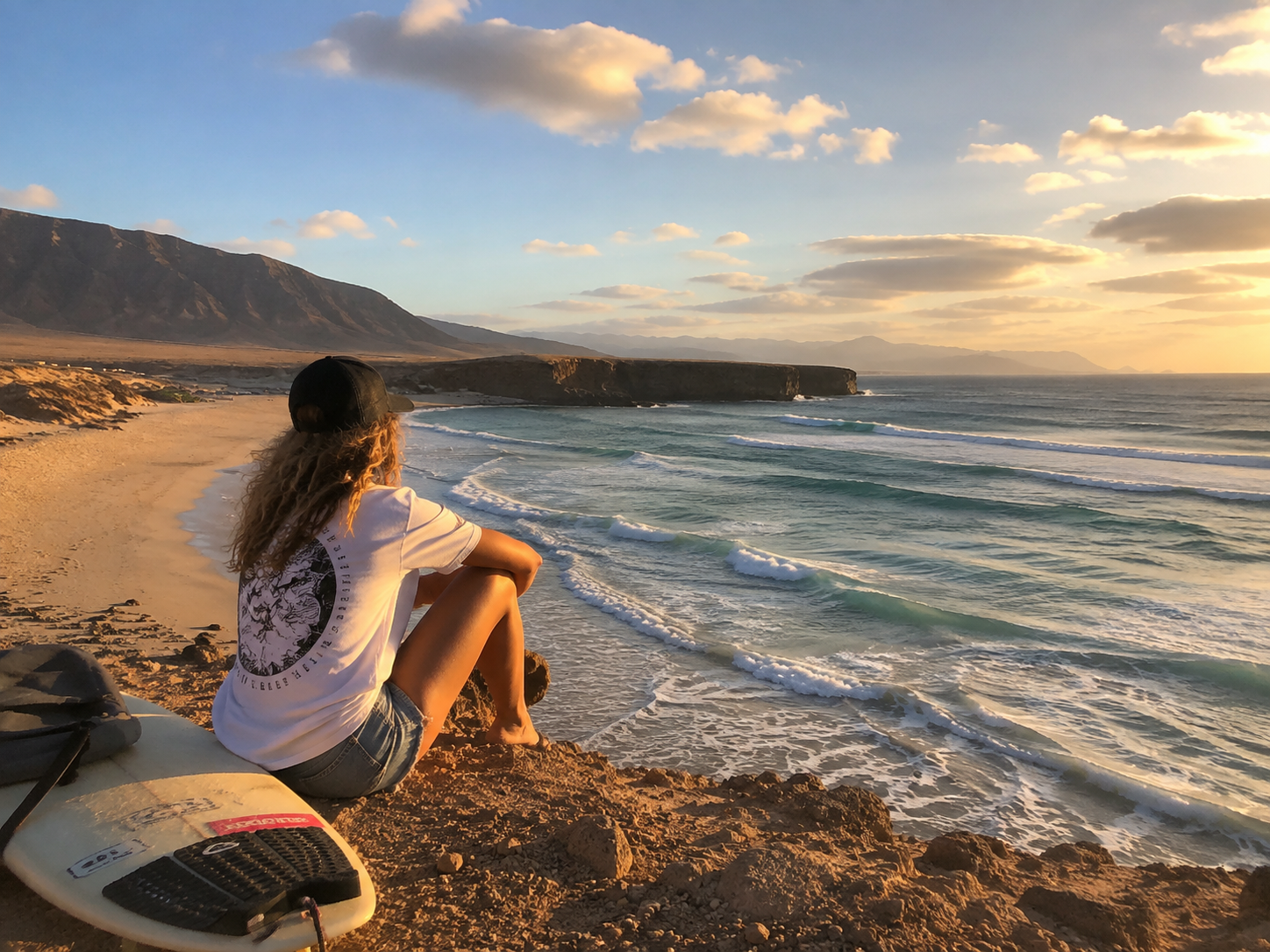

If you’re planning a summer trip to Fuerteventura, there’s a good chance surfing is already somewhere on your list. With warm weather, long days and plenty of time to spend by the ocean, August is a great month to experience the island from a surfboard, particularly if you’re a beginner or looking to improve your surfing.
Fuerteventura is a year-round surf destination, but every season has a different character. While autumn and winter are known for bigger Atlantic swells, summer can bring smaller and more approachable conditions. If you’re still deciding when to visit, our month-by-month guide to the best time to surf in Fuerteventura gives you a better idea of how conditions change throughout the year.
So, what can you expect if you’re surfing in Fuerteventura in August? Here’s what to know before getting in the water.
Is August a Good Month for Surfing in Fuerteventura?
August can be a great time to learn to surf in Fuerteventura. You don’t need powerful waves for your first sessions. In fact, smaller conditions can make it easier to focus on the fundamentals, from paddling and positioning to your pop-up and balance.
Instead of worrying about bigger waves, beginners can concentrate on repeating the same movements and gradually becoming more comfortable on the board. If you’re completely new to surfing, you can also read our guide on why Fuerteventura is good for beginner surfers before your trip.
If you already have some surfing experience, summer sessions can also be useful for working on technique and becoming more independent in the water.
Conditions still vary from day to day, of course. Fuerteventura is an Atlantic island, so there is no single type of wave you can expect throughout August. That variety is part of what makes surfing here interesting.
What Are the Waves Like in August?
Summer surf in Fuerteventura can change considerably depending on the swell, wind and tide. You might have a morning with small, clean waves followed by a much windier afternoon, while another day can bring completely different conditions.
August also falls within the Canary Islands’ trade-wind season. These winds are a normal part of summer in Fuerteventura and can have a big influence on the surf, which is why choosing the right beach and the right time of day is important.
This is where local knowledge becomes particularly useful. Instead of deciding days in advance that you’re going to surf at one particular beach, it’s better to check the conditions and choose a location that suits the group and their experience.
At Kyuka Surfclub, this means looking at the conditions and finding a suitable place for the session rather than simply heading to the same spot every day. For someone who is new to surfing, that takes away much of the guesswork and lets you focus on actually learning.
Why Summer Can Be Great for Beginner Surfers
Learning to surf is all about repetition. During your first sessions, you’ll spend time learning how to position yourself on the board, paddle effectively, catch waves and get to your feet.
At first, it can feel like a lot to think about at once, but after a few attempts the movements start to become more natural. Eventually, you catch a wave, get your feet underneath you and feel the board moving with the water instead of against it.
That first proper ride might only last a few seconds, but it’s usually enough to understand why people keep coming back to surfing.
Summer conditions can provide a good environment to work towards that moment. Smaller waves don’t automatically mean easy surfing, but when the conditions are right, they can create a more approachable setting for beginners to practise and improve.
If you’re wondering how quickly those improvements actually happen, our article on what you can expect from your first week surfing gives a realistic look at the learning process.
Where Can You Surf in Fuerteventura During Summer?
One of the advantages of surfing in Fuerteventura is the variety of coastline. Different beaches and surf spots respond differently to changes in swell direction, wind and tide, so the best place to surf can change from one day to the next.
In the north of the island, you’ll find well-known surf areas around Corralejo, El Cotillo and along the coastline between them. Some locations can work well for learners when the conditions are suitable, while others break over volcanic reef and are much better left to experienced surfers.
If you want a broader overview before arriving, have a look at our guide to the best surf spots in Fuerteventura for every skill level.
This is an important distinction if you’re visiting Fuerteventura for the first time. A surf spot might look inviting from the beach, but that doesn’t necessarily mean it’s suitable for your level. Currents, rocks, reef and changing tides aren’t always obvious when you’re standing on the shore.
Going with an instructor who understands the local coastline can therefore make your first sessions much simpler. You don’t need to work out where to surf or whether the conditions are right for you. Instead, you can concentrate on learning and enjoying your time in the water.
Do You Need a Wetsuit in Fuerteventura in August?
Fuerteventura has a mild climate and relatively warm ocean conditions compared with many European surf destinations, but what feels comfortable will vary from person to person.
The right surf gear will depend on the water temperature, weather, length of your session and how easily you get cold. If you’re taking a lesson, your surf school can help you choose suitable equipment for the day’s conditions.
This is especially useful for first-time surfers, as there’s no need to buy your own board or wetsuit before you’ve even discovered whether surfing is for you.
If you’re coming for several days or staying at a surf camp, our guide on what to pack for a surf camp in Fuerteventura covers the useful things to bring without overpacking.
Is Fuerteventura Good for Your First Surf Trip?
Fuerteventura is a great place to build a holiday around the ocean. You can surf in the morning, explore the island during the day, find somewhere to eat and finish the evening watching the sunset before checking the conditions again the next morning.
Staying at a surf camp can make that experience even easier because surfing becomes part of your daily routine rather than something you have to organise separately. If you’re not quite sure what the experience involves, our guide explaining what a surf camp is and why people choose one is a good place to start.
After a few surf sessions, you may also start looking at the coastline differently. You begin noticing where waves are breaking, how the wind changes the surface of the water and why two beaches that are only a short distance apart can have completely different conditions.
That’s one of the most rewarding parts of learning to surf. You’re not only learning how to stand on a board. You’re gradually learning how to understand the ocean around you.
More Than Just Surfing
A surf trip to Fuerteventura doesn’t have to revolve around the water every hour of the day. The north of the island has plenty to explore between sessions, from beaches and volcanic landscapes to cafés, restaurants and small towns.
Kyuka is based in Lajares, a village that has become a popular base for surfers and travellers exploring the north of Fuerteventura. If you’re planning some time away from the water, check out our local guide to things to do in Lajares.
It’s one of the things that makes a surf holiday here work so well. Even when you’re not surfing, you’re still surrounded by the laid-back outdoor lifestyle that brings people to Fuerteventura in the first place.
Tips for Surfing Fuerteventura in August
If you’re planning to surf during your summer holiday, it’s worth staying flexible. Conditions can change throughout the day, particularly when the wind picks up, so the beach you visited yesterday might not be the best choice today.
It’s also important not to choose a surf spot simply because you’ve seen photos or videos of it online. Some of Fuerteventura’s most impressive waves break over volcanic reef and are intended for surfers with considerably more experience.
For beginners, one of the best things you can do is give yourself more than one session. Surfing has a learning curve, and having a few days in the water gives you much more time to work on your paddling, pop-up, balance and confidence. Small improvements from one session often make the next one much more enjoyable.
Most importantly, don’t put pressure on yourself to be good immediately. Everyone falls, misses waves and gets things wrong when they’re learning. That’s part of surfing, and it’s also part of what makes finally catching a wave so satisfying.
Ready to Surf in Fuerteventura This August?
Whether you’ve never touched a surfboard before or already have a few sessions behind you, August can be a great time to discover the surfing side of Fuerteventura.
You don’t need your own equipment or years of experience. With suitable conditions, the right guidance and a little patience, you can spend your holiday learning a new skill while experiencing a completely different side of the island.
If you want to turn a few surf sessions into a full island experience, take a look at Kyuka Surfclub in Fuerteventura and start planning your time in the water.